Showing posts with label Saskatchewan. Show all posts

Thursday, November 7, 2024

FIFTY YEARS

     Today I received a pin in the mail from the University of Saskatchewan acknowledging my graduation fifty years ago. It seems like yesterday that I was still taking courses.

     Most of my university courses were taken in summer school. Teachers would spend their summer taking a course and then teach to make a living. 

    I had to take one year on campus in order to graduate. I took my one year and did not participate in any University activities. For many students , they were heavily involved in university activities. 

    So today when I got my pin acknowledging 50 years I do not have the great memories other students had as they participated in many activities. 

    Now I finished another  degree in 1968 . No celebration for that degree. I did attend the convocation for my 1968 degree. I skipped the convocation for the 1974 degree. 

    So the pin does bring back some memories. 

    No photos as I thought I had fixed my camera. I discovered that the card was not working so I'll have to get another card. 


Friday, January 8, 2021

CHRISTIAN KLEIN

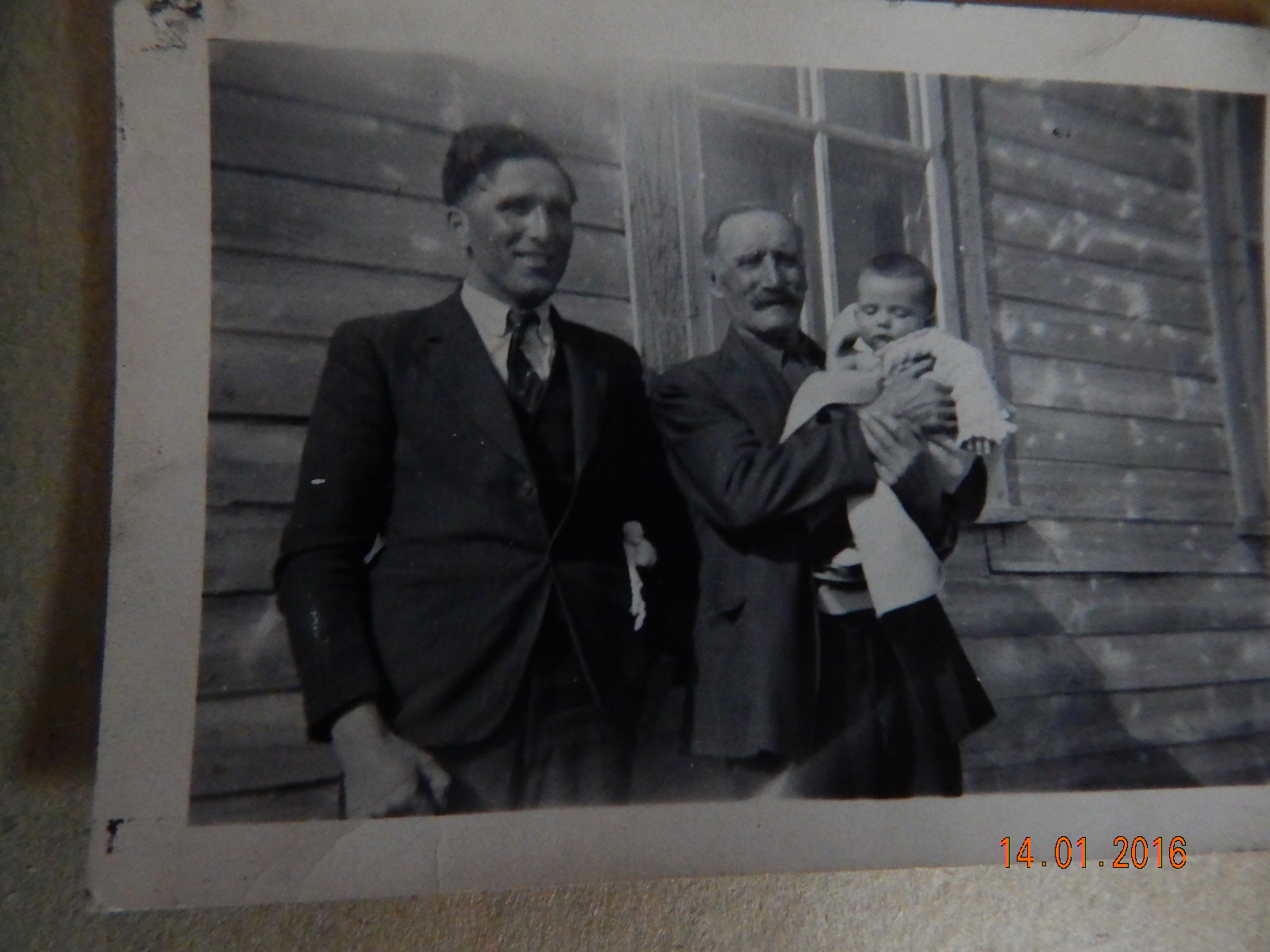
        Christian Klein was born in the mid 1860's in Wischegrad colony , Russia.  He was the oldest son of Gottlieb Klein. Christian was married to Caroline about 1899.  Christian was my grandfather.

        For that time it was unusual for a man to be married in his early 30's. We do know that he was in the Russian army. It's not known how long he was in the Russian army.

        Much of his life is the same as Gottlieb's life. 

        Christian acted as the night watchman in the colony. It's not known how much farming he did. 

       Christian came to Canada in 1900 with his wife and oldest daughter. Three and possibly four children died in early childhood. I know that one lived to be two years old. As a result Christian's children were born later in his life. They had twelve children and eight of them lived to adult hood and some of them lived to be  very elderly.  My Dad was born when Christian was 44 years old.

     Christian  , his wife and two daughters came to Esk , Sask to claim a homestead and begin farming. Life was very challenging in the first years of homesteading. Since there was no railroad, they couldn't sell any products so they had very little money. A railroad was built about three miles from his farm in 1909 and then he was able to sell grain and get some cash. 

      The 1920's were boom times. They were able to borrow money and buy machinery and build some good buildings.  1929 came and they were not able to make payments on the mortgage. Christian and his sons worked together and were able to cover mortgage payments and keep the farm. It was a from rags to riches and back to rags again. 

      I was Christian's first grandson and he was 71 years old. 


      Christian stayed on his farm with his youngest son until he was 78. He then retired in the small village of Esk with its  25 people. His wife Caroline died in 1948. As for most men of that age they knew nothing about housekeeping and he didn't do well. He then began spending part of each year with his sons. So I remember living with Grandpa. As kids we liked our grandpa and he liked us. We talked back and forth. It wasn't until much later in life that I was told that he never learned to speak English and of course we didn't speak German. He could understand enough English and we understood enough German to communicate quite well. 

       He died in 1959 . 

Wednesday, September 9, 2020

EDUCATION OF A PRAIRIE BOY PART III

     So at about 6 years of age I  began the institutional part of my education. Bur don't forget that alongside the institution life experience and learning went on.

      The system I was going into was very different from other systems because of the territory. The Canadian prairies are huge and were sparsely populated. The Canadian prairies were settled around 1900. There were few railroads . Travel and freighting were done with horses. So schools had to be planned so that kids didn't have to travel too far to get to school. The plan was that kids shouldn't have to travel more than 4 miles. I was lucky. I only had to travel one mile and most of the time I walked.

     The school building was built in 1908 and was called Hiawatha. Ever hear the name Hiawatha used somewhere?. It was not insulated and was built with green lumber. As a result the lumber shrunk and left spaces the wind could blow through. The prairies are a very windy place. I remember the wind moaning around and through some of the building. The building also moved slightly in the wind so you always heard the creaking of nails and wood. So some days you listened to the wind song all day. 

     For some reason or other the little kids who were going to start school in September attended school in May and June.  It was a bit like a kindergarten. 

    The good citizens of the prairies were always very proud of their schools. The schools acted as a community center. Many times churches used the schools. 

   So before I actually get to school let me tell you that the education they provided was somewhat limited. Supplies of materials like books were limited. There was an initial purchase of books and not much after that. Teachers had very limited training. Some had not completed high school. Sometimes the school was closed for a while because they could not hire a teacher. Some teachers were very good and some very inept.

   This is the only photo I have of the building. I'm the little fellow in the middle row first left.


Sunday, June 30, 2019

HAPPY BIRTHDAY CANADA

     Tomorrow is Canada's birthday and we will be 152 years old.

      Now you're going to get a little history and geography lesson whether you want it or not.

     At one time this day was called dominion day signifying that we were part of the British Empire. Now we call it Canada Day

    When Canada was formed it was made up of 4 provinces...Ontario, Quebec, New Brunswick and Nova Scotia. Ontario and Quebec were less than half the size they are now. Manitoba joined in 1870, British Columbia in 1871, Prince Edward Island in 1873, Alberta and Saskatchewan in 1905 and Newfoundland in 1949. So it took us a long time to get to where we are now as far as territory is concerned. We still have three large areas that are territories. 

    It also took a long time for us to gain full independence. England controlled the final say in courts and enactments of laws until 1831. 

    So here we are, a relatively young country . We've taken a long time to get here . We've made a few mistakes along the way but have set up many very good things to make it a good country to live in.

    So Happy Birthday Canada!


Friday, February 26, 2016

This book Surprised Me

     I like to read a book that really surprises me by how good it turns out to be. A book was lent to me by a friend why highly recommended it. It was one of those local history biography stories with narrow interest and a small number that were published. I'm interested in local history but it has to have some relation to me or important  events in the history of the area.

      Jack Kates wrote the story of his life while growing up in a small Saskatchewan village during the thirties and forties. The setting makes this story fairly precise. Most people won't have heard of Saskatchewan.

      Well, Jack Kates pulled this off. He wrote a fascinating tale of growing up and the fun he had along the way. This experience shaped him to become a successful man in his field.

       In the early 1900's many Jewish people ran small general stores. Half of the villages had a business owned by Jewish people.

     Jack's family had a small general store in Sheho Saskatchewan. This was a miserable way to make a living. The business was small and credit was given to the customers. Payment of suppliers was difficult. They had a cow, some chickens and grew a vegetable garden. They also picked wild fruit. They survived the many hardships. Things improved for the family during the forties.

      Jack's childhood activities are many. His teenage years and worries are like any other teenager.

     Jack's Jewish faith played an important part in his life and that's what made the book for me. Jack describes his daily life following Jewish religious traditions. They ate kosher food. They celebrated all the Jewish holy times. He describes his bar mitzvah.  the family struggled to maintain contact with the few Jewish people scattered over a wide area.I was familiar with the Jewish faith as I'd read many other books which has Jewish characters. This description was a humorous and laid back and easy to understand..

     And there was a small connection to me in Jack's story. His cousin had a store next to my home town and directed a very competent community band. Jack had also been a friend of one of the best dentists I ever had.

     My wife also read this book. We read in bed and she has the annoying habit of laughing out loud at funny things in a story. She did a lot a of laughing when she read this story.

    Now I won't go out on a limb and recommend that everybody read this book. It's focus is just too narrow for many people to get a feeling of the setting and lifestyle. I just want you to know that this book surprised me and that I really liked it.

Thursday, February 11, 2010

Saskatchewan Towns

       I am presently reading a book called Our Towns by David Mclennan which gives a brief history of Saskatchewan towns. I must admit that I'm a sucker for local history. If there are great pictures, like this book has, I'm really hooked.

      The author has a pattern for each town. He gives it's location, early origin, main economic status and the town's pattern of growth. For 75% of Saskatchewan towns their growth pattern is similar. In their early development they usually prospered and then for reasons of climate, economics or depopulation they withered and died or almost died.

     What intrigues me about these stories is how people came to a new area with dreams of success and worked hard only to fail because of influences they could not control. Yes, some people were the author of their own failure as they were not competent in the enterprize they chose. Many people were eager to start a small business in these villages and towns as they thought they could make a fortune or if not a fortune a good living. They worked hard to establish all the amenities for a community. So schools, roads , parks, hospitals and recreation facilities were built. Much effort and equity was put into these developments.These people were optimists and doers. For many the dream failed. They lost their busnesses or farms after they had put in years of labor and equity. Climate worked against many settlers in the southwest as they did not get enough moisture to produce crops. The depression only made matters worse. Later, the change to highly mechanized farms lead to massive depopulation of rural areas. Better roads and transportation allowed people to travel to cities or larger towns to conduct their business. As a result, local small businesses had to close.

      Having grown up on that isolated Saskatchewan farm in the 40's and 50's I saw many of these changes take place. My father worried about the success of his farm.  He made the right decisions and succeeded. I probably would have become a farmer, but the option was not there.

      For all this hard work and hardship I have a feeling of sadness because these people worked hard and long and in the end lost. As I travel through Saskatchewan and look at the sad little communities I can't help but feel sympathy for these long gone people and the dreams they lost.


    David Mclennan has caught the rich character of Saskatchewan towns in his beautiful book, Our Towns. Thank you David.